
How to read an LED fixture spec sheet
July 21, 2026 guide
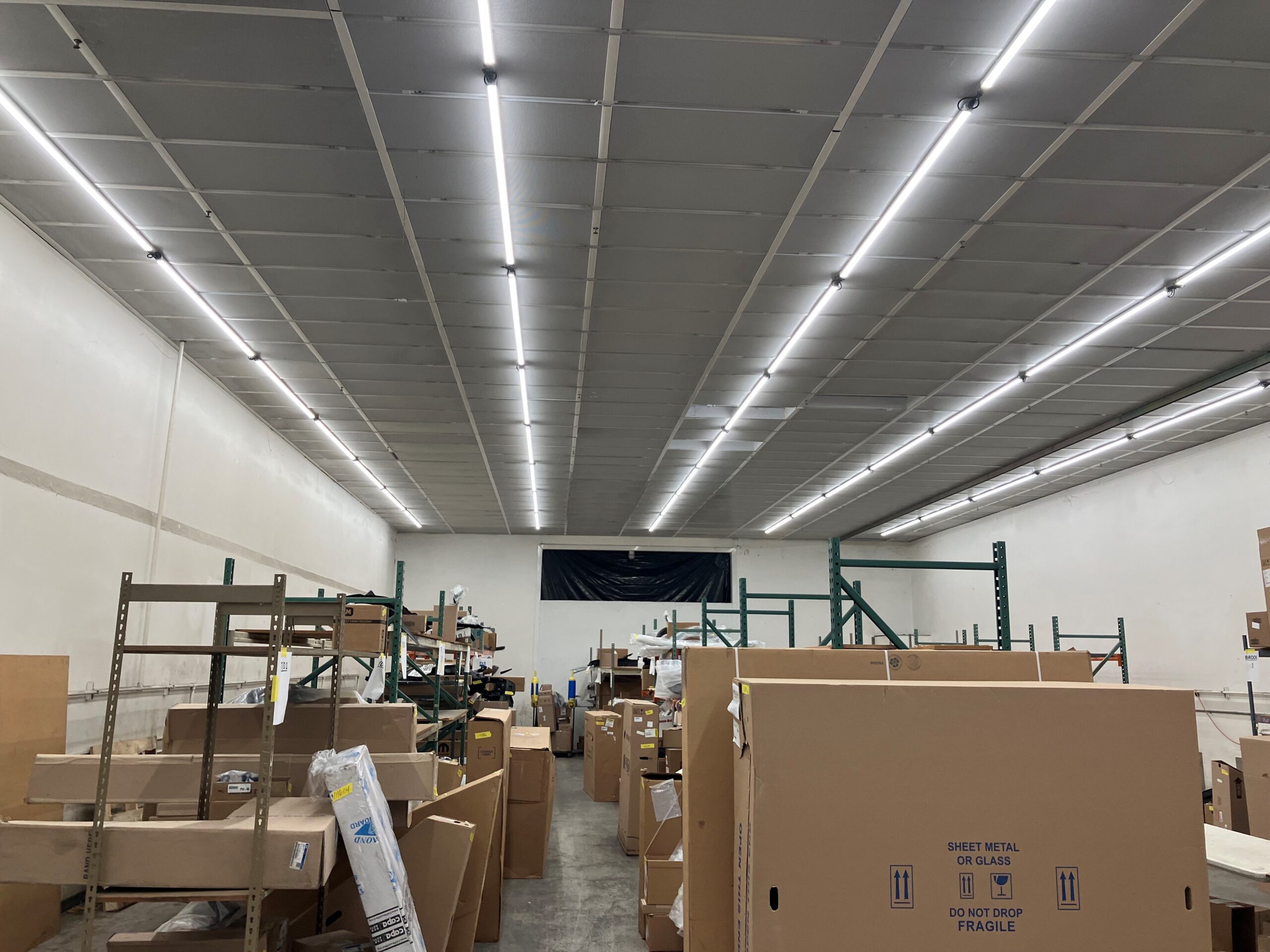
A fixture spec sheet is a short document that answers about a dozen questions, and most of a specifying decision comes down to four or five of its rows. Here is what each one is doing, using the rows that appear on our own sheets.
Watts tell you the bill. Lumens tell you the light
Wattage is consumption. Lumens are output. They track each other loosely within a product family and not at all across families, so comparing two fixtures on wattage alone compares their electricity draw and nothing else.
Two rows from our own catalogue make the point:
- LED Batten Light, 4ft — 30W, ~3600lm
- Crater UFO High Bay — 100W, ~15500lm
The high bay is a little over three times the wattage and more than four times the output, because it is a different optical design doing a different job.
The `Replaces` row is a translation
Where a sheet carries a `Replaces` row, it maps the LED fixture to the legacy fixture it is intended to stand in for. The Crater UFO rows read ~300W HID at 100W, ~400W HID at 150W, ~600W HID at 200W and ~750W HID at 240W. In a retrofit that row is the fastest way to a fixture count: walk the building, note what is up there now, read across.
CCT is the number with a K
Correlated colour temperature describes the appearance of the light, not its quantity. Lower reads warmer, higher reads cooler and bluer.
You will see it written two ways on our sheets, and they mean the same thing:
- GoldBeach Backlit LED Panel — 3500K 4000K 5000K
- SunRiver canopy and adjustable wall pack — 30K/40K/50K
Where several values are listed for one part number, the fixture is selectable: the colour temperature is set at install rather than at order.
CRI describes colour accuracy
Colour rendering index compares how colours look under the fixture against a reference source, on a 100-point scale. The LED Batten Light lists CRI >80, which is the usual specification for commercial and industrial interiors. Where colour judgement is part of the work — retail display, inspection, paint — it is worth asking for the figure rather than assuming it.
IP and enclosure ratings describe where it can live
An IP rating is two digits: solids, then liquids. IP65, which appears across the Crater UFO, Astoria shoebox and SunRiver wall pack rows, means dust-tight and protected against water jets.
The EV chargers use a different scheme for the same purpose — a Type 4 electrical enclosure rating — because they are electrical equipment rather than luminaires. Either way the row is answering one question: can this be mounted where you intend to mount it.
Power factor and voltage are the electrician's rows
PF >0.9, on the Astoria and SunRiver sheets, describes how effectively the fixture converts supplied power into work. A poor power factor means drawing more current for the same output.
AC100-277V, which runs across the whole lighting catalogue, is a universal input range: the same part number works on a 120V circuit and a 277V circuit. On a mixed building that reduces the number of distinct fixtures you have to hold.
Dimming has to be planned, not added
Where a row reads 0-10V — the Crater UFO and the GoldBeach Backlit Panel both do — dimming runs over its own low-voltage control wiring. It is a decision made with the circuit design, not a setting discovered later.
Selectable wattage is one part number doing several jobs
Some sheets list several wattages against one part number. The GoldBeach Backlit Panel 6011BL reads 25/30/40W with 2950-4400lm, and the linear high bay reads 110/135/165W. Useful when the lighting layout is not final, or when you want one item on the shelf covering three light levels.
The IES file settles the argument
Most of the lighting collections publish IES photometric files, and where they exist they are listed by wattage and by input voltage — though not every wattage in a family has one. An IES file is the fixture's measured light distribution in a form lighting software can read, which is how a designer models a real room before anything is bought. Wherever they exist, they are linked from the product page under Documents.
Frequently asked questions
Is a higher lumen figure always better?
No. Too much light in the wrong distribution produces glare and hard shadows, and you pay for the excess twice — once in the fixture and once on every bill after. Match output and distribution to the mounting height and the task, which is what the IES file is for.
What does AC100-277V mean for my building?
It means the fixture accepts any nominal supply in that range, so the same model can be installed on 120V and 277V circuits in the same facility. Check the specific part number, because some products list voltage-specific variants.
The sheet lists a lumen figure with a tilde, like ~23000lm. Why?
The tilde marks a nominal figure rather than a measured one for that exact unit. Where you need the tested distribution instead of a nominal number, use the IES file.
Read More
Related Products
Crater UFO LED High Bay Lights
Crater LED high bay lights are part of a new generation of lighting products that are widely used in high power lighting across the globe. Whether illuminating a warehouse, sports arena, manufacturing facility, or other commercial applications, Crater LEDs deliver the required efficacy, brilliant color quality, efficient light output and impressive long life necessary to get the job done. Crater high bay lighting is generally designed for structures with over 20 ft. (6 meter) of height in warehouse facilities, storage areas, hangers, recreational centers, and other general high bay applications.
GoldBeach LED Panel Light
GoldBeach LED panel lights are a part of an innovative indoor lighting design with high lumens and a DLC Premium listing. The unique design of our LED panel lights allows for even illumination and soft lighting form. Our panel lights have an attractive external appearance as well as very low power consumption. GoldBeach panel lights are available in standard sizes of 1'x4', 2'x2', and 2'x4'. These lights can be ordered with dimming feature, and offer a universal 100-277Vac.
LED Batten Light
LED linear batten lights by LED Trail are the efficient and heavy-duty alternative to traditional light fixtures. These lights are used in industrial lighting, machine shops, textile mills, pharmaceutical plants, warehouse lighting, parking garage lighting, tunnel lighting, supermarket lighting and many more applications. These lights emit a wide 120° beam angle at ~120 lumens per watt, using significantly less energy than any fluorescent or other types of lighting while reducing maintenance and re-lamping costs. This fixture is specialty made with a corrosion free aluminum housing. It is waterproof and uses a frosted polycarbonate lens that is dust tight as well as water and impact resistant. These lights can be mounted on ceilings or on walls with included hardware or may be suspended from a ceiling. LED linear batten lights can also be linked together to lower installation time and cost.
Need help? Call us today.
(971) 200-2760Get in Touch
Contact LED TRAIL today.